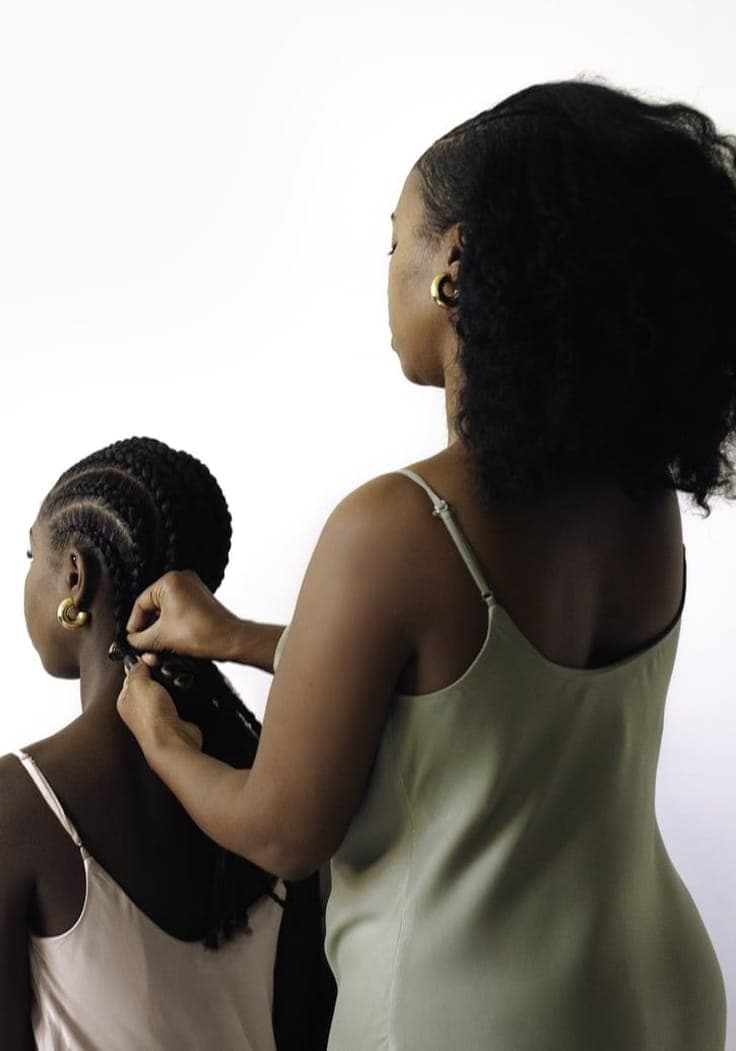
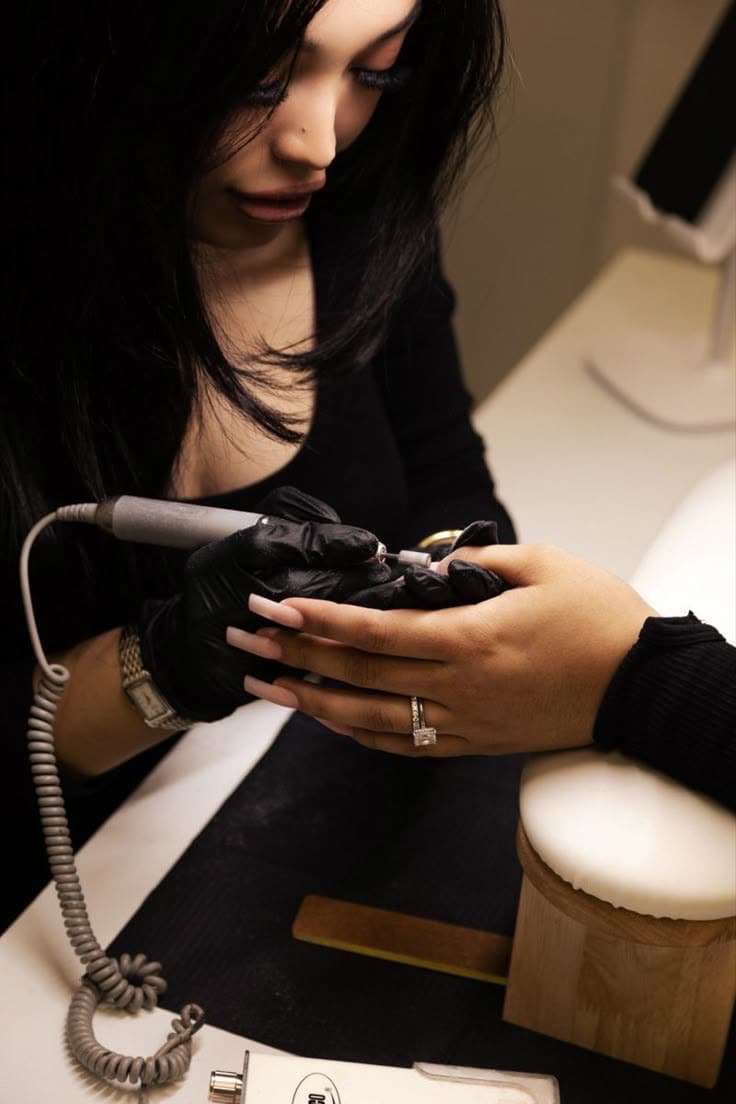
Buffer time between appointments is the time you keep free after a client to tidy up, disinfect or just catch your breath. Without it, the next client is in the chair while you're still sweeping, and your whole afternoon runs late. In Avana one button applies a standard buffer to all your services, and you can choose a different one per service, so colour gets fifteen minutes and a cut five. Clients don't see the buffer on your booking page.
Buffer time works with your opening hours. A service plus its buffer must be finished before your break, and the buffer may run past closing time. For a fuller day, switch on back-to-back booking with a rhythm that suits your services, or set fixed start times per day. Your calendar shows the buffer as a dotted line under each appointment.
Some clients simply need longer: thick hair that needs more processing time, or nails that need repairing first. When you book them in, add extra time and Avana saves it with the client in your client records. If a client later adds an extra with add-ons, it only fits if there's still room, buffer included. All of this comes with every plan; see prices.
How much buffer time should you leave between salon clients?
For most services 5 to 15 minutes is enough: long enough to tidy up, short enough not to leave your day half empty. Base it on what you actually do after that service, not on what feels safe, because every minute of buffer is a minute you can't sell.
A few guidelines from practice. After a cut, five minutes is often enough to sweep. After colour or balayage you need more for the bowl, brushes and basin, so think fifteen. In a nail studio ten minutes after gel polish is common, to clean your table and swap files. After a facial or massage, fifteen minutes helps reset the bed and towels and see the client out calmly. If you find yourself waiting around after a few weeks, lower it; if you keep running late, raise it.
How do you plan a salon day without gaps?
Limit the times clients can start, so each appointment joins on to the one before. A day with no gaps at all is rare when clients choose for themselves, but you can keep gaps small.
Without further settings, clients see whole and half hours plus the moment your previous appointment ends with its buffer, so anyone booking after another client can start right after. A gap before an appointment can still appear. With lots of short services, switch on back-to-back booking with your shortest service as the rhythm, such as 20 minutes for brows. With long services, choose fixed start times per day, such as 09:00, 11:30 and 14:00, so you plan the day rather than your clients.
What's the difference between buffer time, a break and preparation time?
Buffer time belongs to a service, a break belongs to your day, and preparation time is about how late someone can still book. They're similar, but you set them in three different places.
Buffer time always comes after a service and travels with every appointment, wherever it falls; you set it in your services. A break sits at a fixed time in your day, like lunch from 12:30 to 13:00, and goes in your opening hours, up to two a day. Preparation time is the latest online booking time: choose 2 hours and a 14:00 slot can be booked until 12:00, with a different limit per service if you need one. Use the buffer for what you do after every client, the break for yourself, and preparation time so you're never caught off guard.